
Introduction
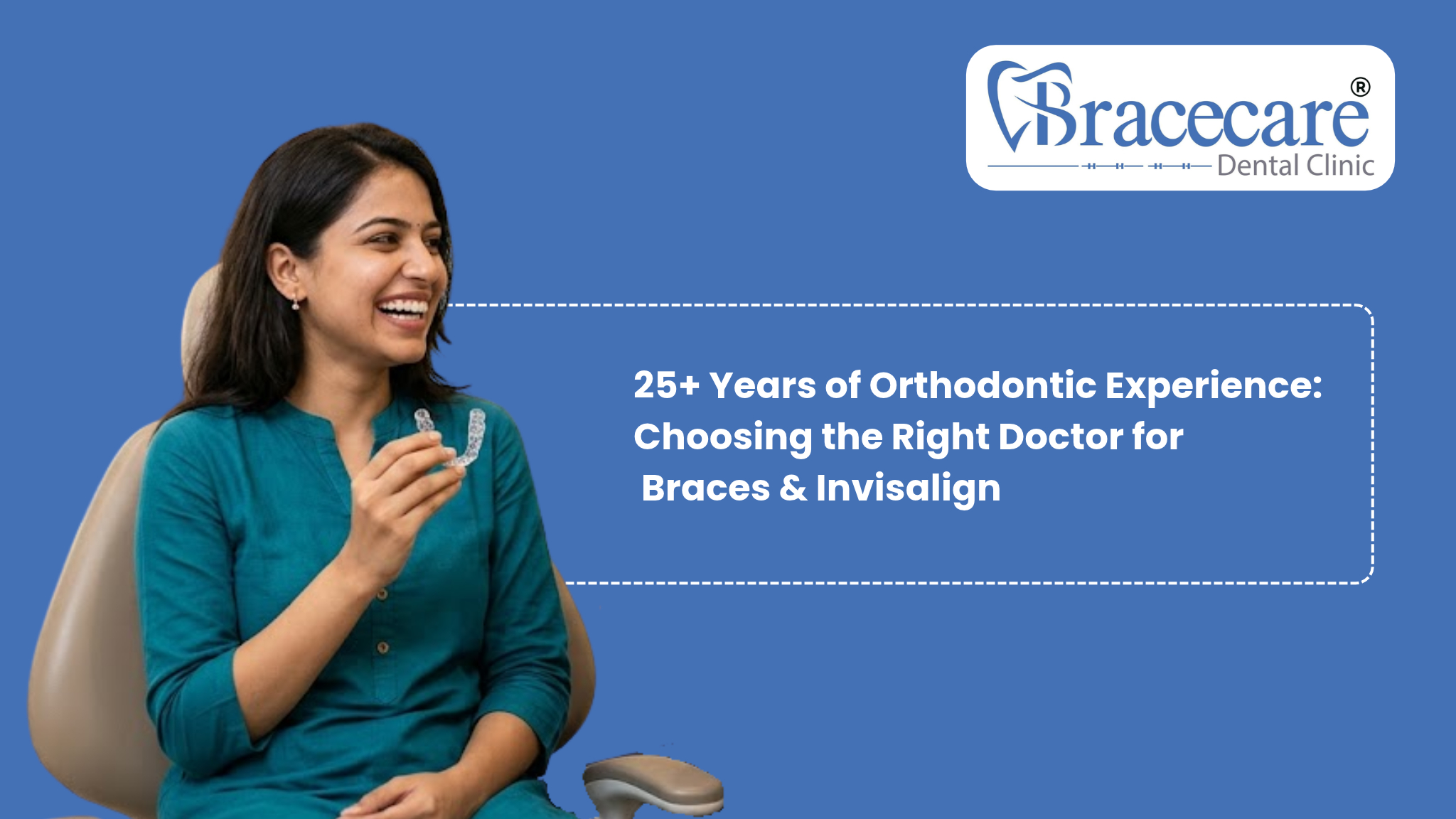
A healthy, well-aligned smile can make a significant difference to your appearance, confidence and oral health. However, achieving properly aligned teeth involves more than simply choosing between traditional braces and modern clear aligners. The experience and expertise of the orthodontist managing your treatment are equally important.
Whether you have crooked teeth, crowded teeth, gaps, protruding teeth or bite-related problems, the right orthodontic treatment can help improve your smile and dental function. With options such as metal braces, ceramic braces and Invisalign clear aligners, patients today have several ways to correct dental alignment.
If you are searching for the best orthodontist in Hyderabad, it is important to consider clinical experience, qualifications, treatment planning methods and the ability to recommend a suitable solution for your individual needs.
At Bracecare Dental Clinic, Manikonda, Hyderabad, orthodontic care includes traditional braces and invisible aligner options. The clinic highlights its experience and personalised dental care, while its orthodontist profile identifies Dr. Madhukar Reddy Rachala as an experienced orthodontic specialist and certified Invisalign provider.
Why Choosing the Right Orthodontist Matters
Orthodontic treatment involves carefully planned tooth movements. Each patient’s teeth, jaw structure, bite and facial profile are different. Therefore, the same treatment approach may not work equally well for everyone.
An experienced orthodontist evaluates the complete dental structure before recommending braces or Invisalign. This helps ensure that treatment addresses both the appearance and function of the teeth.
Here are some important reasons to choose the right orthodontist:
1. Accurate Diagnosis
A proper orthodontic assessment helps identify crowding, spacing, overbites, underbites, crossbites and other alignment concerns. Correct diagnosis is the foundation of an effective treatment plan.
2. Personalised Treatment Planning
Some patients may benefit from metal braces, while others may be suitable for ceramic braces or clear aligners. An orthodontist considers the complexity of the case before recommending an option.
3. Better Monitoring of Tooth Movement
Orthodontic treatment requires regular follow-up appointments. Monitoring helps the orthodontist evaluate progress and make adjustments when necessary.
4. Focus on Long-Term Stability
Completing active treatment is only one part of the process. Retainers and follow-up care help maintain the corrected tooth positions and reduce the likelihood of relapse.
If you are looking for an orthodontist in Manikonda, choose a dental professional who explains the available options, expected treatment duration and aftercare requirements clearly.
Understanding the Importance of Orthodontic Experience
Experience can be an important consideration when selecting a doctor for braces or Invisalign. Orthodontists regularly manage different types of alignment problems, ranging from mild spacing to more complicated bite-related concerns.
An experienced professional can assess how individual teeth need to move, how the upper and lower jaws relate to each other and how treatment may affect the overall smile.
However, years of experience should not be the only factor in your decision. Qualifications, specialist training, clinical judgement, communication and treatment monitoring are also important.
At Bracecare Dental Clinic, the clinic website highlights more than 25 years of experience as part of its overall positioning. Its published profile for Dr. Madhukar Reddy Rachala currently describes him as having more than 15 years of dedicated clinical practice, along with Diplomate status with the Indian Board of Orthodontics and Invisalign-provider certification. Patients should review the individual doctor’s qualifications and experience when selecting a provider.
Meet Dr. Madhukar Reddy Rachala at Bracecare Dental Clinic
Choosing an orthodontist with relevant specialist training can make your treatment journey more informed and organised.
Dr. Madhukar Reddy Rachala is associated with Bracecare Dental Clinic in Manikonda, Hyderabad. According to the clinic’s published profile, he is an orthodontist with more than 15 years of clinical experience and is a Diplomate of the Indian Board of Orthodontics. He is also identified as a certified Invisalign provider.
His professional background includes academic and clinical responsibilities in orthodontics and orthodontic treatment planning.
For patients considering braces treatment in Hyderabad or Invisalign treatment in Hyderabad, a consultation can help determine the most appropriate approach based on tooth alignment, bite concerns and individual smile goals.
You can learn more about the orthodontist through the clinic’s Dr. Madhukar Reddy profile.
Different Types of Braces for Teeth Alignment
Traditional braces remain a widely used orthodontic treatment for correcting different types of dental alignment problems. They use brackets and wires to apply controlled pressure to the teeth, gradually moving them into planned positions.
The right type of braces depends on the patient’s dental condition, treatment goals, preferences and orthodontist’s recommendation.
1. Metal Braces
Metal braces are one of the most established options for correcting misaligned teeth. They consist of metal brackets attached to the teeth and connected by an orthodontic wire.
The orthodontist adjusts the wire periodically to guide tooth movement.
Benefits of metal braces include:
-
Effective for many mild, moderate and complex alignment concerns.
-
Fixed appliances that do not depend on the patient remembering to wear them.
-
Suitable for correcting different types of bite and spacing problems.
-
Generally durable during treatment.
Metal braces are often recommended for patients who need comprehensive orthodontic correction and are comfortable with a visible appliance.
2. Ceramic Braces
Ceramic braces work similarly to traditional metal braces but use tooth-coloured or less noticeable brackets.
They are an option for people who want fixed orthodontic treatment with a more discreet appearance.
Benefits of ceramic braces include:
-
Less noticeable than conventional metal brackets.
-
Fixed treatment that works continuously.
-
Can address many common alignment concerns.
-
Suitable for patients who prefer a more aesthetic braces option.
Ceramic brackets may require additional care because they can be more prone to staining or damage than metal brackets, depending on the materials and habits involved.
3. Self-Ligating Braces
Self-ligating braces use a specialised bracket mechanism to hold the orthodontic wire instead of relying on conventional elastic ties.
Depending on the case and treatment system, they may offer certain advantages in appliance maintenance and adjustment appointments. However, they are not automatically faster or better for every patient.
An orthodontist can explain whether this option is appropriate for your treatment requirements.
What Is Invisalign and How Does It Work?
Invisalign treatment is a modern orthodontic approach that uses a series of customised, transparent aligners to gradually move teeth into their planned positions.
Unlike conventional braces, Invisalign aligners are removable. Patients generally wear each set according to the orthodontist’s instructions before progressing to the next set.
The aligners are designed using digital treatment planning, allowing the orthodontist to map the intended tooth movements.
Benefits of Invisalign Clear Aligners
1. Discreet Appearance
Invisalign aligners are transparent, making them less noticeable than conventional metal braces. This can be appealing to working professionals, students and adults who prefer a subtle orthodontic option.
2. Removable Design
Patients can remove the aligners while eating, drinking anything other than water, brushing and flossing. This makes everyday oral hygiene more convenient.
3. Comfortable Material
The smooth plastic design avoids the metal brackets and wires associated with traditional braces. Some pressure or temporary discomfort may still occur when changing aligners.
4. Digital Treatment Planning
Digital scans and treatment-planning software can help the orthodontist visualise the intended tooth movements and organise the sequence of aligners.
5. Lifestyle Convenience
Because the aligners are removable and discreet, many patients find them easier to incorporate into professional and social routines.
However, Invisalign requires discipline. Patients generally need to wear the aligners for the recommended number of hours every day. Not following the prescribed schedule can affect treatment progress.
For more information, explore Invisalign treatment at Bracecare Dental Clinic.
Braces vs Invisalign: Which Option Should You Choose?
Both traditional braces and Invisalign can help correct misaligned teeth. However, they differ in design, maintenance and suitability.
| Feature | Traditional Braces | Invisalign |
|---|---|---|
| Appearance | Visible brackets and wires | Transparent aligners |
| Removable | No | Yes |
| Eating | Certain foods should be avoided | Remove aligners before meals |
| Oral hygiene | Requires careful cleaning around brackets | Easier to brush and floss after removal |
| Daily discipline | Fixed appliance | Requires consistent wear |
| Complex cases | Suitable for many complex movements | Depends on the complexity and planned movements |
| Follow-up | Regular orthodontic adjustments | Progress reviews and aligner changes |
There is no single treatment option that is best for everyone. The choice depends on the severity of misalignment, bite condition, lifestyle and treatment expectations.
Patients looking for clear aligners in Hyderabad may prefer Invisalign because of its discreet appearance and removable design. However, traditional braces may be more appropriate for certain complex orthodontic cases.
A detailed examination by an orthodontist is the best way to make an informed decision.
Common Dental Problems That Orthodontic Treatment Can Correct
Orthodontic treatment is not limited to improving the appearance of crooked teeth. It can also address alignment and bite problems that affect everyday oral function.
Some common concerns include:
Crowded Teeth: Crowding occurs when there is insufficient space for all the teeth to align properly. It can make brushing and flossing difficult.
Gaps Between Teeth: Spacing can develop naturally or due to missing teeth, differences in tooth size or other dental factors.
Overbite: An overbite occurs when the upper front teeth overlap the lower front teeth more than usual.
Underbite: An underbite occurs when the lower front teeth sit in front of the upper front teeth.
Crossbite: A crossbite develops when some upper teeth sit inside the lower teeth during biting.
Open Bite: An open bite occurs when certain upper and lower teeth do not meet when the mouth is closed.
Protruding Teeth: Some patients have upper front teeth that extend noticeably forward, which may affect appearance and increase the risk of injury.
An orthodontist evaluates the underlying cause of these concerns before recommending treatment.
What to Expect During Your Braces or Invisalign Consultation
Your first orthodontic consultation is an important step towards achieving a healthier, well-aligned smile. It allows the orthodontist to understand your concerns and determine which treatment options may be suitable.
Step 1: Initial Dental Examination
The orthodontist examines your teeth, gums, jaw relationship and bite. They may also ask about previous dental treatments and your expectations.
Step 2: Diagnostic Records
Depending on your condition, diagnostic records may include photographs, dental X-rays, digital scans or other assessments.
These records help the orthodontist understand the position of your teeth and the relationship between your jaws.
Step 3: Treatment Recommendation
After evaluating the findings, the orthodontist discusses suitable treatment options. These may include metal braces, ceramic braces or Invisalign.
Step 4: Treatment Planning
A personalised treatment plan is prepared according to the required tooth movements, complexity and expected duration.
Step 5: Starting Treatment
Once you understand the treatment plan and decide to proceed, the orthodontist begins the selected treatment. This may involve fitting braces or arranging customised aligners.
Step 6: Regular Follow-Up Appointments
Follow-up visits help the orthodontist monitor tooth movement, check appliance condition and make any necessary adjustments.
How Long Does Orthodontic Treatment Take?
The duration of orthodontic treatment varies from person to person. Some patients may require a relatively short period of correction, while others with complex bite or alignment concerns may need longer treatment.
Factors that influence treatment duration include:
-
Severity of crowding or spacing.
-
Type of bite problem.
-
Amount of tooth movement required.
-
Selected orthodontic appliance.
-
Patient’s age and individual response to treatment.
-
Consistency with aligner wear instructions.
-
Attendance at scheduled follow-up appointments.
-
Overall oral health.
Traditional braces and Invisalign do not have a fixed treatment duration for every patient. Your orthodontist can provide an estimated timeline after examining your teeth and preparing a treatment plan.
Why Digital Technology Matters in Modern Orthodontics
Modern orthodontic treatment increasingly uses digital tools to support diagnosis and planning.
Digital scanning can capture detailed images of the teeth without relying on conventional impression materials in suitable cases. These scans can help the orthodontist evaluate tooth positions and plan aligner treatment.
Digital treatment planning may also allow patients to understand the proposed tooth movements and visualise aspects of the intended outcome.
At Bracecare Dental Clinic, published information highlights digital scanning and smile simulation as part of its Invisalign-related approach.
Technology can support treatment planning, but it does not replace the orthodontist’s clinical judgement. Accurate diagnosis, appropriate treatment selection and regular monitoring remain essential.
How to Maintain Your Teeth During Braces Treatment
Good oral hygiene is particularly important when wearing fixed braces because food particles and plaque can collect around brackets and wires.
Follow these general care practices:
-
Brush your teeth carefully after meals whenever possible.
-
Use an orthodontic toothbrush or other cleaning aids recommended by your dentist.
-
Clean between your teeth using suitable interdental brushes or flossing aids.
-
Avoid hard, sticky and excessively chewy foods that may damage brackets or wires.
-
Attend regular dental cleanings and orthodontic appointments.
-
Contact your orthodontist if a bracket becomes loose or a wire causes irritation.
Patients with braces should follow the specific cleaning and dietary instructions provided by their orthodontist.
Tips for Maintaining Invisalign Aligners
Invisalign requires consistent daily habits to support the planned tooth movements.
Wear Aligners as Prescribed: Follow your orthodontist’s instructions regarding daily wear time and aligner changes.
Remove Them Before Eating: Take out your aligners before meals and avoid eating with them in place.
Clean Your Teeth Before Reinserting: Brush and floss after eating to reduce the risk of trapping food debris.
Clean Your Aligners Properly: Follow the recommended cleaning instructions and avoid exposing the aligners to hot water.
Store Them Safely: Keep aligners in their protective case whenever they are not being worn.
Attend Follow-Up Appointments: Regular reviews help your orthodontist monitor progress and identify whether any changes are required.
Wear Retainers After Treatment: Once active treatment is complete, follow the prescribed retention plan to help maintain the results.
Why Consider Bracecare Dental Clinic for Braces and Invisalign?
Choosing a dental clinic for orthodontic treatment involves considering the doctor’s experience, treatment options, communication and follow-up care.
Bracecare Dental Clinic in Manikonda, Hyderabad, offers orthodontic options that include metal and ceramic braces as well as invisible braces and Invisalign-related services.
Some factors patients can consider when exploring the clinic include:
-
Orthodontic Expertise: The clinic’s published profile identifies Dr. Madhukar Reddy Rachala as an orthodontist with specialist qualifications and Invisalign-provider certification.
-
Multiple Treatment Options: Patients can discuss traditional braces and clear aligner options according to their dental needs.
-
Digital Treatment Planning: The clinic highlights digital scanning and smile simulation in its Invisalign-related information.
-
Personalised Care: Orthodontic recommendations should be based on an individual’s teeth, bite and treatment goals.
-
Follow-Up Support: Regular monitoring is important throughout braces and aligner treatment.
If you are searching for an experienced orthodontist in Hyderabad, a consultation at Bracecare Dental Clinic can help you understand your treatment options and decide on the next steps.
When Should You Visit an Orthodontist?
You do not need to wait until dental alignment problems become severe before seeking professional advice.
Consider consulting an orthodontist if you notice:
-
Crowded or overlapping teeth.
-
Noticeable gaps between teeth.
-
Difficulty biting or chewing.
-
Upper and lower teeth not meeting comfortably.
-
Teeth that appear to be shifting.
-
Protruding front teeth.
-
Jaw discomfort associated with bite problems.
-
Changes in your smile after previous braces treatment.
Children, teenagers and adults can all benefit from an orthodontic assessment when alignment concerns are present. The appropriate timing and treatment approach depend on dental development and individual needs.
Frequently Asked Questions
1. How do I choose the best orthodontist in Hyderabad?
Look for an orthodontist with relevant specialist qualifications, clinical experience, experience treating your particular alignment concern and a clear approach to treatment planning. Discuss available options, expected duration, costs and follow-up requirements before starting treatment.
2. Is Invisalign better than traditional braces?
Neither option is universally better. Invisalign offers a discreet and removable design, while traditional braces may be suitable for a wider range of complex tooth movements. The best option depends on your dental condition and orthodontist’s recommendation.
3. Can adults undergo braces treatment?
Yes. Adults can undergo orthodontic treatment to correct crowded teeth, spacing, bite problems and other alignment concerns. The orthodontist will first assess gum health, bone support and overall dental condition.
4. Are clear aligners suitable for crowded teeth?
Clear aligners can correct many cases of mild to moderate crowding, and selected more complex cases may also be suitable. Suitability depends on the amount and type of tooth movement required.
5. How long does Invisalign treatment take?
The duration depends on the complexity of the case, the number of planned aligners and how consistently the patient wears them. Your orthodontist can estimate the timeline after an examination.
6. Do braces cause pain?
Patients may experience temporary pressure, tenderness or mild discomfort after braces are fitted or adjusted. This usually improves as they adapt. Persistent or severe discomfort should be discussed with the orthodontist.
7. Is it necessary to wear retainers after braces or Invisalign?
Yes. Retainers are generally recommended after active orthodontic treatment because teeth can gradually shift towards their previous positions. Follow your orthodontist’s instructions about retainer wear and follow-up.
8. Where can I consult an Invisalign specialist in Manikonda?
You can contact Bracecare Dental Clinic in Manikonda, Hyderabad, to enquire about Invisalign and other orthodontic treatment options. The clinic’s published profile identifies Dr. Madhukar Reddy Rachala as an Invisalign provider.
Conclusion
Choosing the right orthodontist is one of the most important decisions when planning braces or Invisalign treatment. A properly aligned smile requires more than attractive results; it also involves a healthy bite, suitable tooth positioning and long-term stability.
Whether you are considering metal braces, ceramic braces or Invisalign clear aligners, your treatment should begin with a detailed orthodontic assessment. The right professional can help you understand your options, explain the expected treatment process and recommend an approach that suits your dental needs.
For patients exploring braces treatment in Hyderabad, Invisalign treatment in Hyderabad or clear aligners in Manikonda, Bracecare Dental Clinic offers orthodontic consultation and treatment options. With specialist-led care and an emphasis on personalised treatment planning, patients can take an informed step towards improving their smiles.
Book an orthodontic consultation at Bracecare Dental Clinic and discuss the right treatment option for your smile.
Clinic: Bracecare Dental Clinic, Manikonda, Hyderabad
Orthodontist: Dr. Madhukar Reddy Rachala
Phone: +91 73372 00705
Website: https://bracecaredentalclinic.com/

